




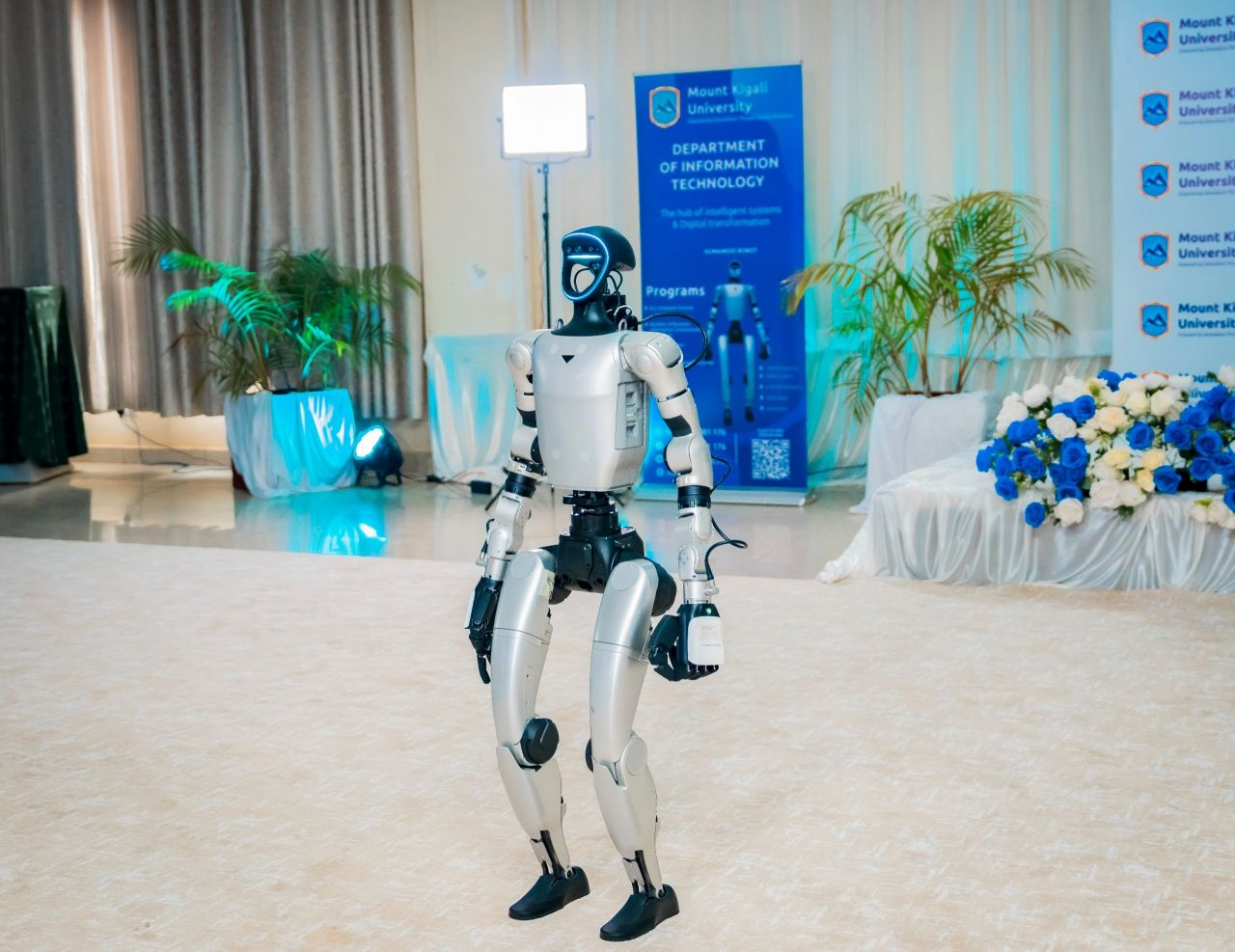
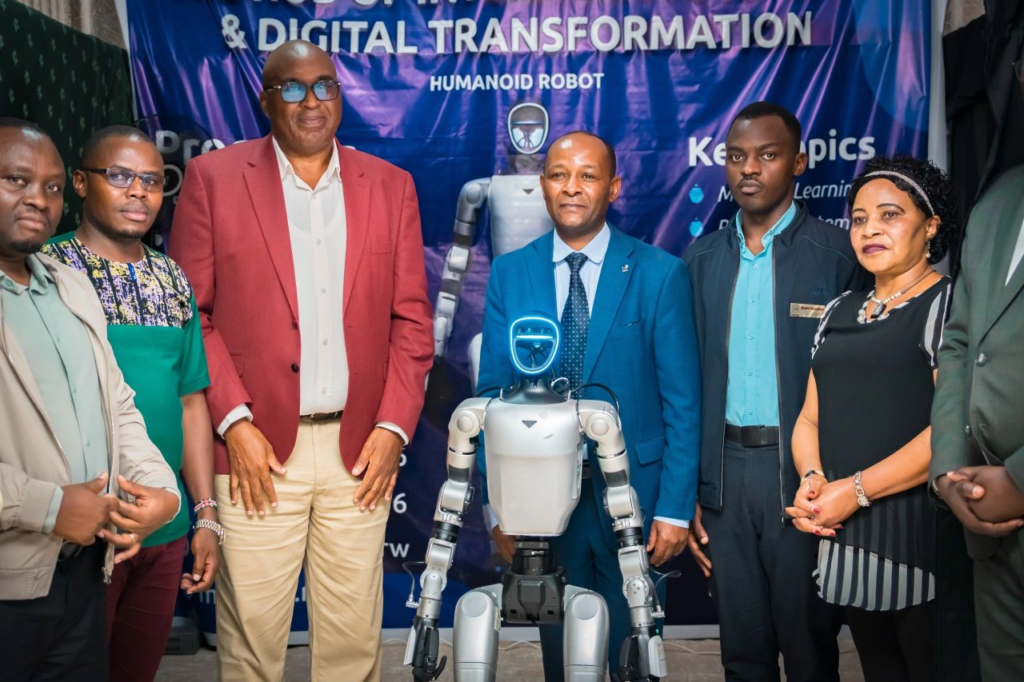
Mount Kigali University has officially unveiled a newly acquired humanoid robot, marking a major step in advancing technology driven education in Rwanda. The introduction of this system reflects a growing shift toward hands on learning in artificial intelligence and robotics.
The humanoid robot will allow students to move beyond theoretical knowledge and engage directly with real world applications. By interacting with the system, learners can develop practical skills in areas such as artificial intelligence, robotics programming, computer vision, and human robot interaction.
This development aligns with the increasing demand for industry ready graduates who can operate and innovate within emerging technology sectors.
Enhancing Skills Through Hands On Experience
The integration of a humanoid robot into the academic environment creates new opportunities for experiential learning. Students can now test algorithms, build intelligent systems, and observe how machines interact with human environments.
ALSO READ: OpenAI Shuts Down Sora and Ends $1 Billion Partnership with Disney
This approach strengthens technical understanding by allowing learners to apply concepts in real scenarios. It also improves problem solving skills, as students experiment with system design, automation, and AI driven decision making.
As industries adopt automation and intelligent systems, practical exposure to such technologies becomes essential for career readiness.
Supporting Innovation and Research
The humanoid robot will play a key role in student innovation and research activities. It provides a platform for developing projects that address real world challenges using advanced technologies.
Students and researchers can explore applications in areas such as smart systems, automation, and data driven decision making. The system also supports testing and prototyping, enabling learners to refine their ideas before implementation.
This initiative encourages a culture of innovation where students actively contribute to technological solutions.
Promoting Multidisciplinary Collaboration
The introduction of the humanoid robot also strengthens collaboration across different academic disciplines. Fields such as engineering, data science, and intelligent systems can now work together on integrated projects.
Multidisciplinary collaboration allows students to combine knowledge from various domains. This approach reflects how modern technology solutions are developed in real industries, where teams often include experts from multiple fields.
ALSO READ: Google Expands Quantum Computing Research with Neutral Atom Technology
By fostering collaboration, the university prepares students for complex work environments that require diverse skill sets.
Preparing Students for the Digital Future
Mount Kigali University’s investment in advanced robotics demonstrates its commitment to preparing students for a rapidly evolving digital economy. The adoption of such technologies ensures that learners gain both theoretical knowledge and practical experience.
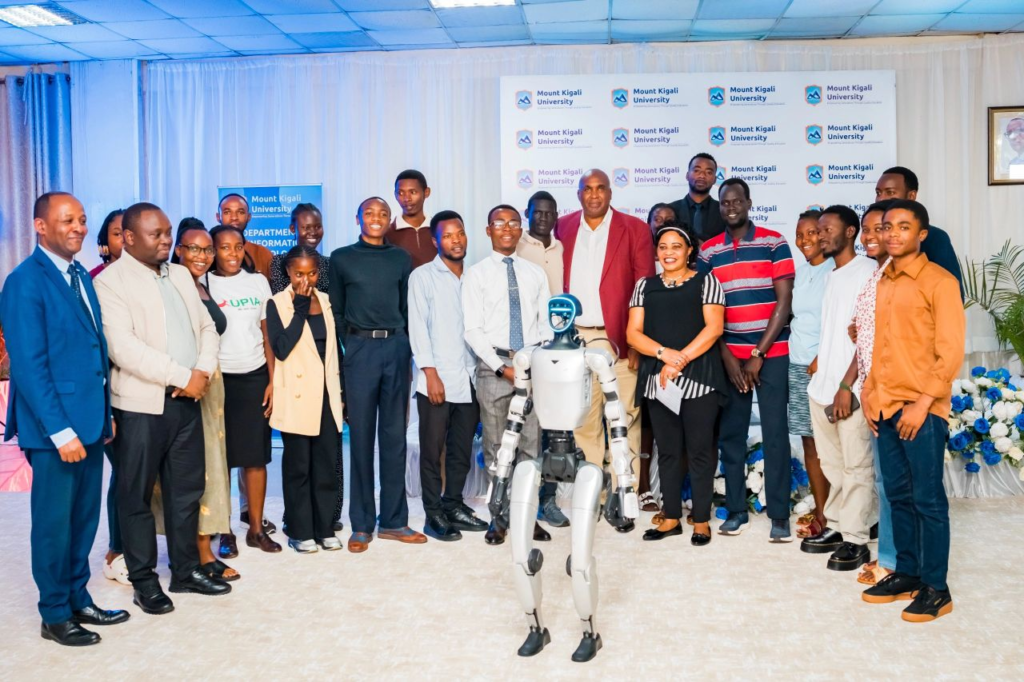
As artificial intelligence and robotics continue to transform industries, educational institutions play a critical role in building the next generation of innovators. Access to advanced tools like humanoid robots helps bridge the gap between education and industry needs.
Future Outlook for AI Education
The use of humanoid robots in education is expected to expand as universities seek to modernize their teaching methods. Institutions that adopt such technologies early may gain a competitive advantage in producing skilled graduates.
For students, exposure to real AI systems enhances employability and opens pathways into careers in robotics, automation, and intelligent systems.
Mount Kigali University’s initiative highlights how technology can transform education and empower students to actively participate in the future of innovation.
MORE STORIES:
 MTN Forum Urges Women to Shape AI Leadership Not Just Access
 How AI Tools Work and How to Use Them Effectively
 Rwanda Seeks Re Election to ITU Council
 AI Capabilities and Limits: Generative AI, NLP, AGI Explained
 Macron India Visit Centers Africa AI Partnership
 OpenAI Ends Microsoft Exclusivity Deal
 Ascent Africa Invests in Clarence AI Platform
 Arda Startup Targets Manufacturing With Advanced AI Platforms
 Google introduces ‘Ask Maps’ feature powered by Gemini AI
 AI prompting strategies: Do polite words improve chatbot accuracy?