




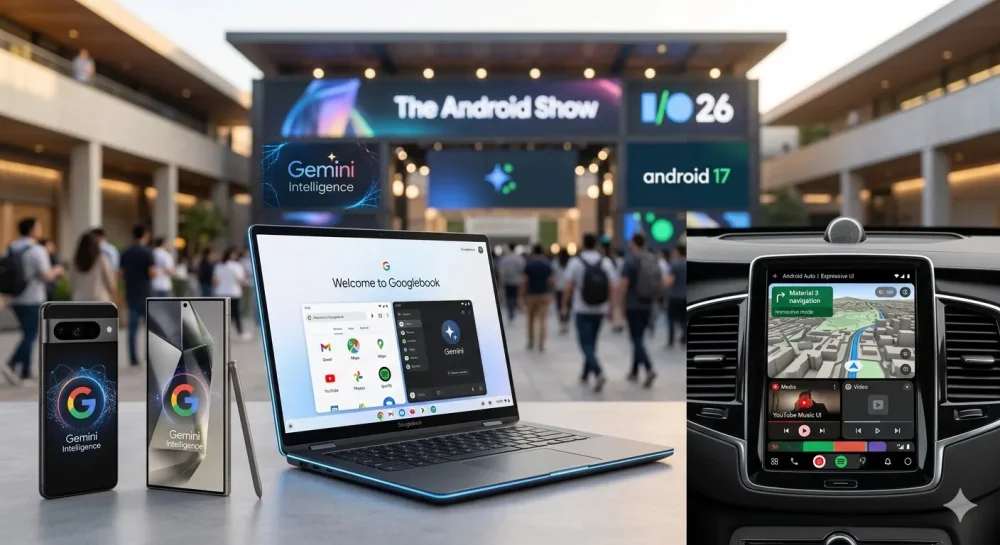
Google has officially released the final version of Android 17 alongside Wear OS 7, introducing a range of new artificial intelligence features, security improvements, and productivity tools. The update arrives first on Pixel devices and forms part of Google’s broader strategy to integrate AI more deeply into everyday digital experiences.
The latest release focuses on helping users create content faster, manage devices more efficiently, and access smarter automation tools across smartphones and wearable devices.
AI Takes Center Stage in Android 17
One of the most significant additions is Gemini Omni, a new AI-powered feature that allows users to edit videos using simple text commands. Instead of relying on complex editing tools, users can describe the changes they want, and the system performs the edits automatically.
Google has also introduced Lyria 3, an AI music creation tool that generates original songs from text prompts or uploaded images. The feature expands creative possibilities for content creators, musicians, and everyday users.
Meanwhile, Pixel 10a users gain access to AudioLM, an advanced speech-to-speech translation technology designed to make multilingual communication more natural and accurate.
Improved Device Connectivity and Multitasking
Android 17 strengthens device compatibility by improving Quick Share functionality. On supported Pixel devices, the feature now works more seamlessly with Apple’s AirDrop ecosystem, making file sharing easier across different platforms.
Google has also introduced Bubble Bar, a new multitasking tool that provides quick access to recently used applications. Users can organize, move, and reopen apps more efficiently, helping them switch between tasks with minimal interruption.
For foldable smartphones, Android 17 adds a dedicated gaming layout that divides the display into two sections. One side can function as a virtual game controller while the other displays gameplay, creating a more immersive gaming experience.
New Features for Content Creators
The update includes tools designed for social media creators and digital professionals.
Users can now record their screen while simultaneously capturing video using the front-facing camera. This feature supports content creation for platforms such as YouTube, Instagram, and TikTok, where tutorials, reactions, and live demonstrations continue to grow in popularity.
Stronger Security and Family Controls
Google has expanded Android’s security capabilities with new protection tools.
The Find Hub platform now includes a Mark as Lost feature that helps users secure missing devices more quickly. Android 17 also incorporates enhanced threat detection capabilities to identify suspicious activity in real time.
Parents receive additional control options, including tools that help manage screen time and content access through PIN-based settings without requiring linked Google accounts.
Wear OS 7 Enhances Emergency Response Features
Google’s Wear OS 7 introduces important health and safety upgrades for Pixel Watch users.
The smartwatch can automatically contact emergency services or designated contacts when it detects incidents such as falls, accidents, heart-related emergencies, or other potentially dangerous situations.
The platform also supports real-time updates from smartphone applications and offers improved integration with AI-powered smart glasses and wireless audio devices.
Future Outlook
Android 17 reflects Google’s growing focus on artificial intelligence, automation, and connected ecosystems. The company plans to introduce additional AI capabilities later this year, including custom widget creation, personal data organization through Personal Intelligence, and more advanced automation tools.
Google also reports that Android 17 improves battery efficiency by up to 10% while enabling users to automate complex multi-step tasks across multiple applications. These upgrades position Android 17 as one of Google’s most AI-focused operating system releases to date.

MORE STORIES:
 Mark Zuckerberg Develops AI Agent to Transform Meta’s Operations
 Raising Kids in the Age of AI: What Parents Don’t See
 EVP to Build 55 New EV Charging Stations Across Rwanda
 AI Homework Use Surges Among Students, Raising Concerns Over Critical Thinking Skills
 Intron Expands Sahara AI Speech Platform to 57 Languages
 AI Tutors Reshape the Future of Education
 AI Tools for Students Explained: A Simple Guide
 How to Protect Your Brain in the Age of AI
 OpenAI Launches ChatGPT Health to Analyze Medical Data
 Securing AI Agents: A Car-Driving Analogy for Governance
jp44t9