




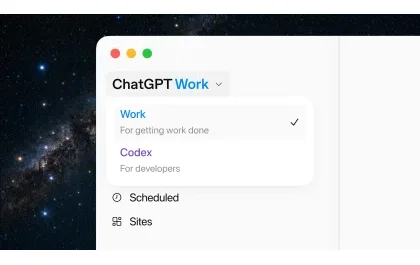
OpenAI has introduced ChatGPT Work, a new artificial intelligence platform designed to help users create software, websites, presentations, and written content with little or no advanced programming experience. The launch marks another major step in the growing competition among AI companies developing professional productivity tools.
The company officially unveiled ChatGPT Work on July 9, 2026, alongside the release of its latest AI model, GPT-5.6. The new platform combines the conversational capabilities of ChatGPT with Codex, OpenAI’s coding technology, creating an integrated workspace that can assist users throughout software development and other professional tasks.
Making AI Coding More Accessible
OpenAI says ChatGPT Work aims to make software development easier for a wider audience, especially professionals who do not have extensive programming knowledge but want to build digital products using artificial intelligence.
The platform enables users to generate computer code, design websites, prepare presentations, draft business documents, and complete other workplace tasks through natural language prompts. By reducing technical barriers, OpenAI hopes to make AI-assisted development more accessible to businesses, educators, entrepreneurs, and knowledge workers.
This approach reflects the growing demand for AI tools that simplify complex technical work without requiring users to become software engineers.
Competition in the Enterprise AI Market
The launch positions ChatGPT Work as a direct competitor to Claude Cowork, an enterprise productivity platform introduced by Anthropic in January 2026.
Claude Cowork focuses on managing complex, multi-step workflows with minimal human supervision. Instead of requiring users to guide every stage of a project, the system can organize, plan, and execute tasks independently.
OpenAI’s latest release demonstrates how leading AI companies continue to compete by expanding their enterprise offerings and improving workplace automation.
As organizations increasingly integrate AI into daily operations, software providers are racing to deliver platforms that combine productivity, automation, and coding assistance within a single environment.
Powered by GPT-5.6
ChatGPT Work runs on GPT-5.6, OpenAI’s newest flagship language model released alongside the platform.
The updated model delivers stronger reasoning, improved coding performance, better document creation, and more accurate responses across professional workflows. These improvements allow users to complete technical and creative projects faster while reducing manual effort.
The integration of GPT-5.6 with Codex also enables the platform to support software development from initial planning through implementation.
Availability and Rollout
OpenAI has started rolling out ChatGPT Work through both its website and desktop application.
The platform first became available to users with Pro, Enterprise, and Edu subscriptions. The company plans to extend access to Plus and Business subscribers in the following days as part of a phased global rollout.
This gradual release allows OpenAI to monitor performance, gather user feedback, and continue refining the platform before wider adoption.
Opportunities and Challenges
ChatGPT Work has the potential to increase productivity by helping individuals and organizations automate coding, content creation, and document preparation. Small businesses, startups, educators, and professionals without technical backgrounds may particularly benefit from the platform’s simplified workflow.
However, increased reliance on AI also raises important questions about code quality, cybersecurity, data privacy, and the need for human oversight. Organizations adopting AI-powered development tools will still need appropriate review processes to ensure accuracy, security, and compliance.
Future Outlook
The introduction of ChatGPT Work highlights the rapid evolution of enterprise artificial intelligence. As competition between OpenAI and Anthropic intensifies, users can expect continued innovation in AI-powered workplace tools.
Future updates are likely to deliver more advanced automation, deeper collaboration features, stronger integration with business software, and broader support for software development across multiple industries.
Artificial intelligence continues to reshape professional work, making advanced digital capabilities increasingly accessible to users regardless of their technical background.
MORE STORIES:
 Apple Unveils a New Approach to AI Integration
 OpenAI Upgrades Codex for Business and Office Tasks
 OpenAI Launches $10B AI Deployment Venture
 Google Staff Oppose Military Use of AI
 Growing AI Adoption Brings New Questions About Water Use
 AI Voice-Cloning Scams Are Rising: How to Stay Safe
 SpaceX Prepares Historic Public Market Debut
 DeepSeek cuts prices on new AI model V4-Pro with 75% discount to attract developers
 AI Companion Device Sparks Global Debate on the Future of Human Relationships
 From Screenwriters to Doctors: The New Jobs Created by AI