




Researchers in China are making progress on a brain-computer interface that could help people with severe vision loss regain limited visual abilities.
A 40-year-old Chinese woman who had struggled with severe vision loss for nearly two decades has regained part of her ability to see after receiving an experimental device that connects visual signals from the eye to the brain.
The woman, identified by the pseudonym Lingling for privacy reasons, became the first person in China to receive a domestically developed high-resolution retina-based visual brain-computer interface, or BCI.
How the technology works
Doctors at Zhejiang Provincial People’s Hospital implanted the device in Lingling’s eye in May 2026 as part of an experimental medical study.
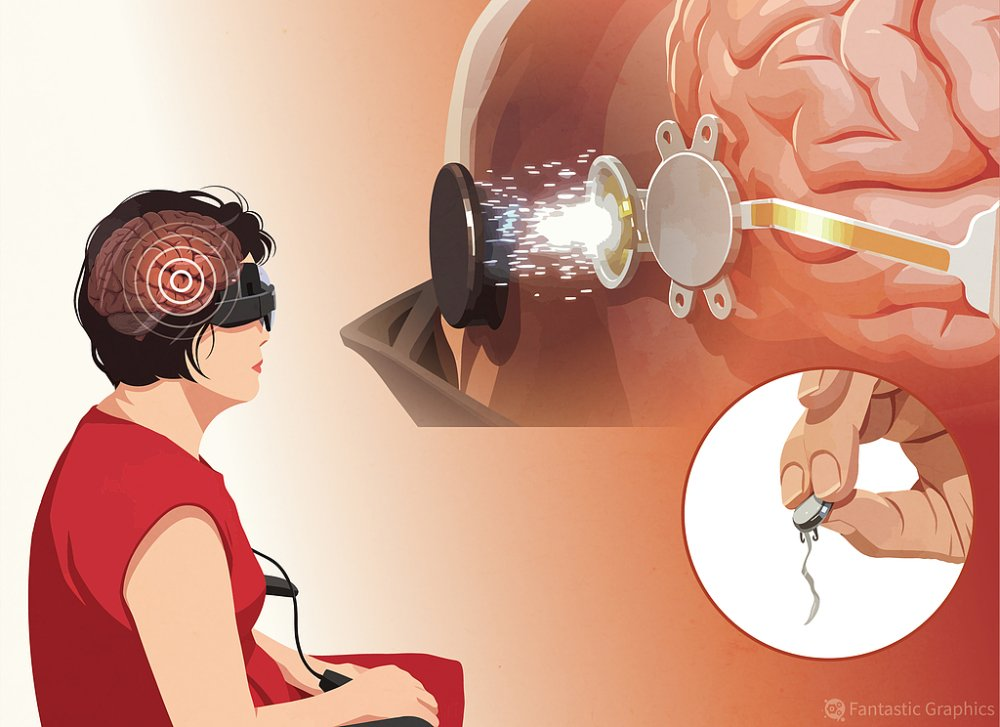
The technology combines a small implant placed on the retina with a miniature camera mounted on special glasses worn by the patient.
The camera captures images and sends the information to a processing system. The processed signals then reach the implant inside the eye, which converts them into electrical signals.
Those signals stimulate nerve cells in the retina. The visual information then travels through the remaining functioning visual pathways to the brain.
Instead of immediately producing normal vision, the system initially allows patients to perceive small points of light. Through repeated training, patients can learn to interpret these signals and recognize simple shapes, obstacles, directions and eventually some letters.
Patient begins learning to recognize letters
After months of medical treatment and training, Lingling began showing encouraging progress.
She is now learning to distinguish letters and practicing writing. Researchers say the technology does not restore normal eyesight, but it could provide useful visual information to people who previously had very limited or no vision.
The images remain relatively unclear and appear closer to black-and-white patterns than normal human vision.
For someone who has lived with severe vision loss for many years, however, even limited visual information could improve independence.
Recognizing obstacles, identifying basic shapes and understanding directions could help patients move around more safely and perform some everyday activities with less assistance.
Another patient also shows progress
A separate trial at Xiangya Hospital of Central South University in Hunan Province produced similar results.
A 61-year-old woman identified as Chen had developed retinitis pigmentosa at the age of 40. The condition eventually caused complete blindness in both eyes.
Doctors implanted a small device in her retina on April 23, 2026. The implant measured about 6 by 10.8 millimeters, roughly the size of a fingernail.
After undergoing training, Chen achieved a reported visual acuity level of 0.1. She could distinguish lines pointing in different directions and walk indoors while following directional information provided by the system.
Who could benefit from the technology?
The technology does not work for every type of blindness.
Researchers are focusing on patients whose retinas have suffered damage but whose optic nerves and brain regions responsible for processing visual information remain functional.
This distinction is important because the system depends on the brain’s ability to receive and interpret electrical signals generated by the implant.
The approach could therefore become an option for some people with retinal disorders, particularly those whose vision loss results from conditions that damage the retina while leaving parts of the visual pathway intact.
The technology still has major limitations
Despite the promising early results, researchers caution that the technology remains experimental.
Patients do not yet receive normal or high-definition vision. Instead, they must learn how to interpret artificial visual signals through extensive training.
The system also requires specialized equipment, surgery and continued medical supervision. Researchers will need to evaluate its long-term safety, reliability and effectiveness before it can become widely available.
The cost also remains unclear. Authorities will need to approve the technology and determine the conditions under which doctors can use it before researchers can establish how much treatment will cost patients.
A potential new direction for medical technology
Retina-based brain-computer interfaces represent a growing area of research that combines medicine, neuroscience, electronics and artificial intelligence-related signal processing.
If future trials confirm the early results, the technology could provide a new option for people who cannot benefit from conventional treatments for certain forms of blindness.
Researchers will still need to conduct larger studies involving more patients and longer follow-up periods. They will also need to determine whether the visual improvements remain stable over time.
For now, the Chinese trials offer an early indication that electronic systems connecting the eye and brain could eventually help some people with severe vision loss recover useful forms of visual perception.
MORE STORIES:
 Nvidia doubles down on AI agents
 Rwanda Partners with UAE, Malaysia for AI Boost
 The Hidden Risks of Smart Toys for children under 5 years
 Dan Forest Launches Blockchain and AI Coalition to Shape Tech Policy
 Meta Accelerates AI Driven Transformation
 AI Explained Simply: A Beginner’s Guide for Everyone
 xAI Founders Depart as Company Undergoes Major Restructuring
 Motorola Unveils Razr Fold as Competition in Foldable Phones Intensifies
 ChatGPT Integrated with Adobe Photoshop to Simplify Photo Editing
 AI Makes Workers Faster But Also Creates Friction and Mistrust at Work