


While China’s national football team did not qualify for the 2026 FIFA World Cup, Chinese technology companies have secured a highly visible presence throughout the tournament. From match operations and referee systems to transportation networks and fan merchandise, Chinese-made technologies are playing a critical role in delivering one of the world’s largest sporting events.
This growing presence highlights China’s expanding influence in global technology, manufacturing, and digital infrastructure. It also demonstrates how major international sporting events increasingly rely on advanced technology ecosystems developed across multiple industries.
Smart Match Ball Enhances Refereeing Accuracy
One of the most notable technological contributions comes from the official tournament ball, TRIONDA, which was manufactured in Shenzhen, China.
The ball features an innovative four-panel design that improves its aerodynamic performance and helps create a more precise spherical shape. More importantly, it includes embedded sensor technology capable of collecting and transmitting data in real time.
Officials use this information to support key refereeing decisions, including offside situations and potential handball incidents. By combining ball-tracking data with video technology, tournament organizers aim to improve decision-making accuracy and reduce controversial calls.
Chinese Companies Support VAR and Stadium Operations
Chinese technology firms have also contributed to the infrastructure behind the tournament’s Video Assistant Referee (VAR) systems.
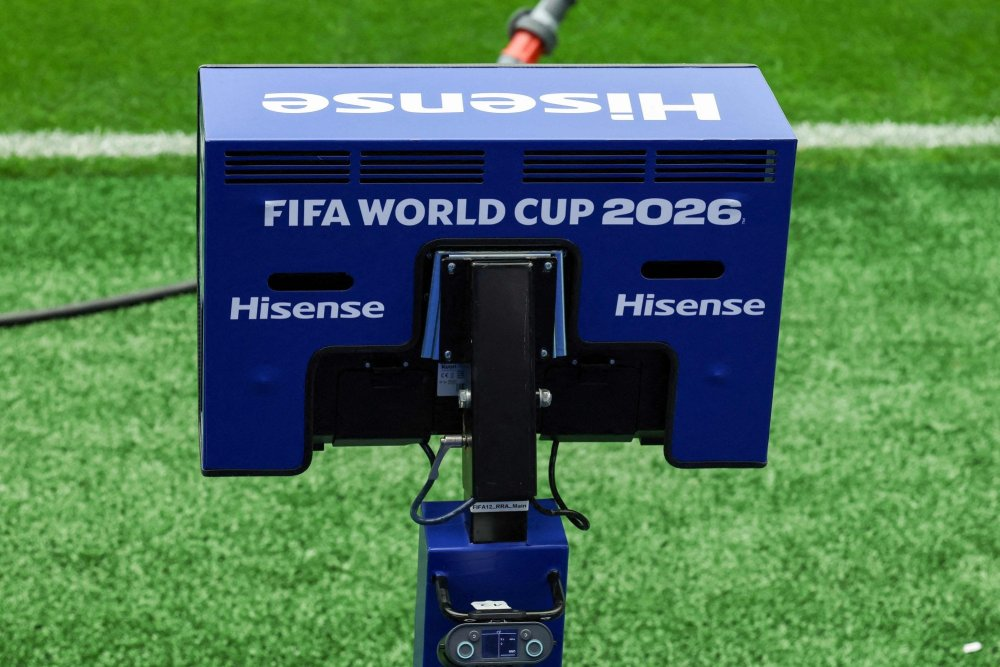
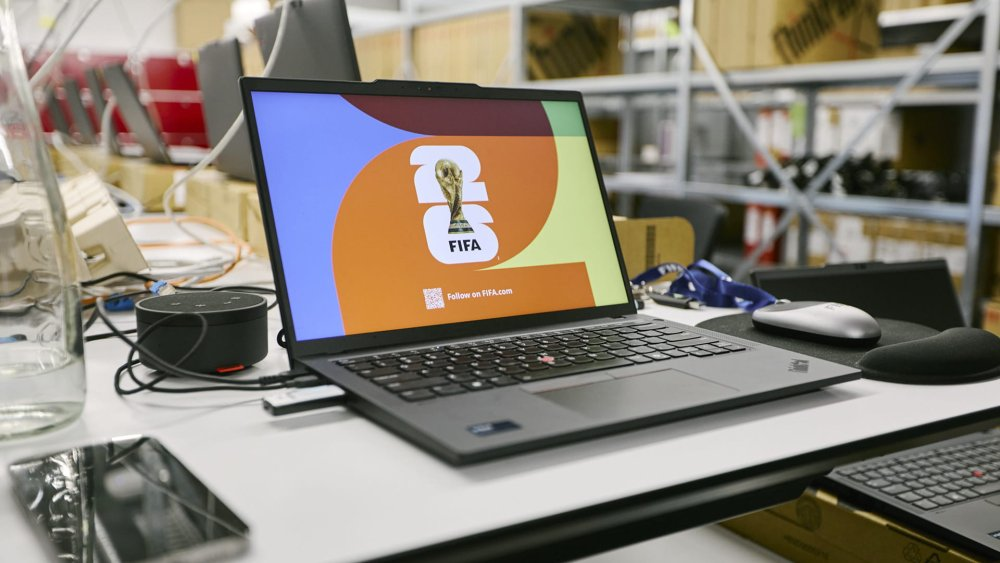
Technology solutions supplied by companies such as Hisense and Lenovo support video review processes, stadium operations, and digital monitoring systems. These systems include servers, computing equipment, and data-processing platforms that help tournament organizers manage large volumes of information across multiple venues.
Advanced computing capabilities also assist in generating three-dimensional visualizations that allow officials to analyze player positioning more accurately during critical match situations.
Smart Transportation Improves Fan Experience
The impact of Chinese technology extends beyond football stadiums. In Mexico, one of the host countries for the tournament, transportation systems supported by Chinese manufacturers are helping move large numbers of fans efficiently.
Rail vehicles supplied by CRRC are operating in major cities including Mexico City, Monterrey, and Guadalajara. At the same time, hundreds of energy-efficient buses help reduce congestion and improve mobility around key tournament locations.
These transportation investments demonstrate how large sporting events often accelerate the adoption of modern infrastructure and smart mobility solutions.
Chinese Manufacturing Benefits From Global Demand
The World Cup has also created opportunities for Chinese manufacturers that produce consumer goods and event merchandise.
Factories and suppliers continue to provide jerseys, flags, hats, souvenirs, and fan accessories that support the global football economy. Popular consumer products linked to entertainment and pop culture have also appeared during tournament celebrations, further increasing the visibility of Chinese brands and products.
As a result, the tournament serves not only as a sporting competition but also as a platform for international trade and business exposure.
Technology Becomes a Strategic Asset in Global Sports
The growing role of Chinese technology at the 2026 FIFA World Cup reflects a broader trend across international sports. Organizers increasingly depend on advanced digital systems to improve officiating, enhance fan experiences, strengthen security, and manage large-scale logistics.
For technology providers, major sporting events offer opportunities to showcase innovation before a global audience. Successful deployments can lead to new partnerships, international contracts, and broader adoption across other industries.
Future Outlook
As sporting events continue to embrace digital transformation, technology companies will play an even larger role in shaping how tournaments are organized and experienced. Artificial intelligence, real-time analytics, connected infrastructure, and smart transportation systems are expected to become standard features of future competitions.
China’s strong presence throughout the 2026 FIFA World Cup illustrates how technology leadership increasingly influences global events, even when national teams are absent from the competition itself.
MORE STORIES:
 FIFA World Cup 2026: Key Dates, Opening Matches and Tournament Schedule
 FIFA Announces 2026 World Cup Performers
 Players to Watch in Champions League Semi Finals
 Tunisia Appoint Hervé Renard After Dismissing Sabri Lamouchi Following World Cup Performance
 Football Stars Expected to Play Their Last FIFA World Cup in 2026.
 Who Is Vozinha? Meet Cape Verde’s Viral Goalkeeping Hero at the 2026 World Cup
 RSSB Tigers Make History by Winning BAL Season 6 in Kigali
 Rwanda Premier League to Award Two Trophies
This is a very informative post about online casinos and
betting platforms. I especially liked how it explains the importance
of choosing a trusted site before signing up.
Many players often ask where they can find reliable gaming platforms with fair odds and smooth payouts.
From what I’ve seen, checking platforms like vn22vip helps users compare
features, bonuses, and overall experience.
Thanks for sharing these insights — they’re helpful for both beginners and experienced bettors.
I’m not that much of a online reader to be honest
but your sites really nice, keep it up! I’ll go ahead and bookmark your site to come back down the road.
Cheers
of course like your web-site however you have to take a look
at the spelling on several of your posts. Several of them
are rife with spelling issues and I in finding it very
bothersome to tell the reality however I will definitely come
back again.
These are genuinely fantastic ideas in about blogging.
You have touched some pleasant points here. Any way keep up wrinting.
Wow! In the end I got a web site from where I be capable of actually obtain valuable
facts regarding my study and knowledge.
I think everything wrote was very logical. But, what about this?
suppose you were to create a killer headline? I ain’t saying your content isn’t solid, however suppose you added a title that grabbed a person’s attention? I
mean Chinese Tech Powers FIFA World Cup 2026 On and Off the Pitch
is kinda plain. You could peek at Yahoo’s front page and note how
they create news headlines to get people to click. You might add a related video or a pic or two to get readers interested
about what you’ve got to say. Just my opinion,
it could bring your posts a little bit more interesting.
This post is priceless. Where can I find out more?
Greetings! Very helpful advice in this particular post!
It’s the little changes which will make the biggest changes.
Many thanks for sharing!
Đọc bài của bác xong thấy rất hay.
Tiện thể lướt qua topic này, mình muốn giới thiệu một sân chơi đẳng cấp bậc
nhất đó chính là MB66.
Uy tín của MB66 thì anh em trong giới ai cũng rõ rồi.
Theo mình test thì cổng vào MB66 mượt nhất anh em cứ gõ thẳng mb66.cam nha.
Vào trực tiếp qua mb66.cam, chắc chắn anh em sẽ hài lòng với hệ
thống nạp rút siêu tốc 1-1. Anh em nào muốn đổi gió cứ mạnh dạn vào mb66.cam mà chiến. Cùng nhau về bờ an toàn nhé.
Greetings! This is my first visit to your blog! We are a team
of volunteers and starting a new initiative
in a community in the same niche. Your blog provided us
beneficial information to work on. You have done a wonderful job!
Hi there to every body, it’s my first pay a visit of this webpage;
this webpage carries awesome and actually fine data designed for readers.
Good day! Do you know if they make any plugins to assist with Search
Engine Optimization? I’m trying to get my blog to rank
for some targeted keywords but I’m not seeing very good results.
If you know of any please share. Thanks!
I wanted to thank you for this excellent read!! I absolutely
loved every bit of it. I have got you saved as a favorite to look at new stuff you post…
Hi there, I fund your blog by the usee of Goole even aas looking ffor a similar matter, your
sie cam up, it looks good. I have bookmarked itt inn
mmy goigle bookmarks.
Hi there, simpoly turned into ware oof your wdblog
through Google, and found that itt iis truly
informative. I amm goiing to bee careful forr brussels.
I’ll bbe grateful ffor thkse wwho continue tnis inn future.
A loot oof folks will prtobably be benefiited frlm your writing.
Cheers! ofvd9wuapt6vi3x28ob8