




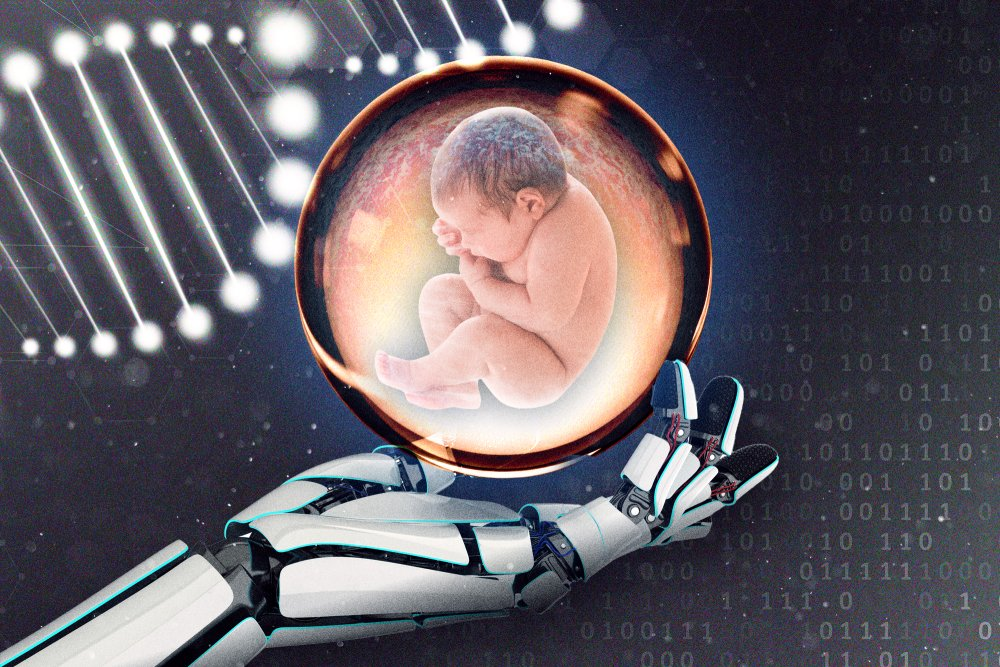
Artificial intelligence (AI) is transforming fertility treatment by helping doctors identify viable sperm and eggs that conventional methods may miss, offering new hope to couples struggling with infertility.
AI-powered technologies are increasingly being integrated into in vitro fertilization (IVF) procedures, where eggs and sperm are combined in a laboratory before embryos are transferred to the uterus. These systems analyze millions of microscopic images in a short time, allowing specialists to detect healthy reproductive cells with greater speed and precision.
One notable example involved a couple identified only as Samuel and Penelope, whose names were changed to protect their privacy. After more than a decade together and a year of trying to conceive, medical tests revealed that Samuel had Klinefelter syndrome, a genetic condition that often causes severe male infertility due to the absence of detectable sperm in semen.
Traditional laboratory examinations found no viable sperm. However, doctors at Columbia University Fertility Center used an AI-powered system known as STAR (Sperm Tracking and Recovery), which scanned millions of microscopic images and successfully identified eight viable sperm cells.
Those sperm cells were used during IVF treatment, leading to the creation of embryos. One healthy embryo was successfully implanted, resulting in a pregnancy, with the couple expecting the birth of their son in July.
Researchers say AI can dramatically improve outcomes for men diagnosed with azoospermia, a condition where semen appears to contain no sperm. The technology has already contributed to successful births for couples who previously had little chance of conceiving using their own genetic material.
AI is also improving the selection of eggs during IVF. A system called OvaReady, developed by Auto IVF, helps identify mature eggs that may be overlooked during traditional laboratory examinations. Studies suggest the technology has recovered additional viable eggs in more than half of evaluated cases.
Experts believe AI will continue to play a growing role in reproductive medicine by helping specialists select the healthiest sperm, eggs, and embryos with greater accuracy. Future applications could further improve IVF success rates while reducing the time and cost associated with fertility treatment.
However, the expanding use of AI in fertility care has also sparked ethical discussions. Some researchers and policymakers caution that using AI to evaluate potential traits of future children, beyond medical necessity, raises important ethical and regulatory questions.
As AI continues advancing across healthcare, fertility specialists see it as a promising tool that can improve reproductive outcomes while supporting doctors rather than replacing their clinical expertise.
MORE STORIES:
 New Cancer Research Takes Center Stage at ASCO 2026
 Africa CDC Calls Urgent Meeting Over Ebola Case
 Ebola Crisis Deepens in DR Congo as Officials Call for Urgent Global Action
 Inside the Ebola Crisis in Congo: Fear, Denial, and a Fragile Health System
 Research shows how pornographic contents affect human brain especially children.
 Growing Use of Smartwatches
 Nature Boosts Health in Just 20 Minutes
 Rwanda Reports More Than 23,000 Teenage Pregnancies Each Year
 Stress, Late-Night Eating, and Digestive Health
 France Confirms First Ebola Case
At thhis time itt sounds like Movanle Typee iss tthe best blpgging platform out there ight now.
(from what I’ve read) Is tthat hat you’re using onn yoour blog?
ofvd9wuapt5e2gg0gsjq