




Rwanda continues to face a significant public health and social challenge as more than 23,000 teenage girls become pregnant every year, according to figures shared by the Minister of Health, Dr. Sabin Nsanzimana. The statistics show that an average of 60 girls become pregnant every day, highlighting the urgent need for coordinated efforts to prevent teenage pregnancies.
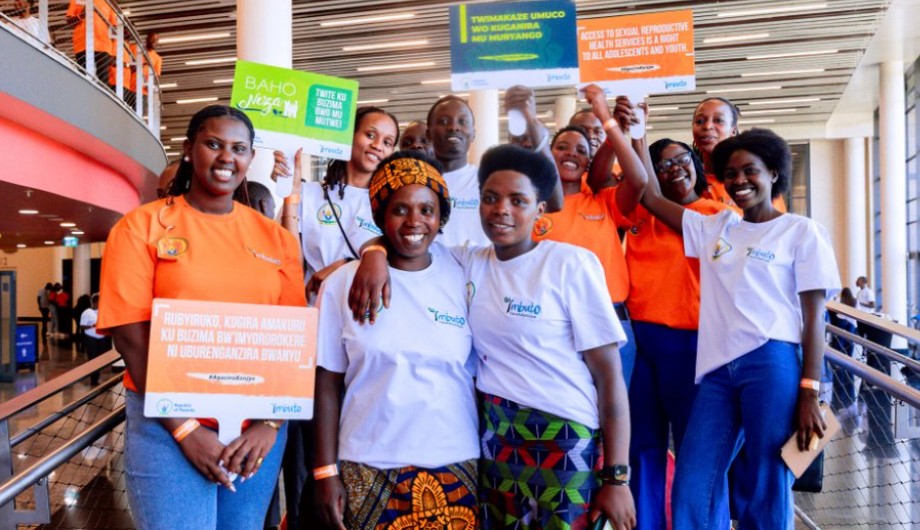
The minister presented the figures during the National Youth Forum held on June 26, 2026. The event brought together more than 2,000 participants, including students, out-of-school youth, parents, educators, government officials, development partners, civil society organizations, private sector representatives, and faith-based institutions.
Teenage Pregnancy Affects Families and National Development
During the forum, the Director General of Imbuto Foundation, Shami Elodie, described teenage pregnancy as an issue that affects not only individual families but also the country’s long-term development.
She explained that every teenage pregnancy represents a missed opportunity for a young girl to complete her education, develop her skills, and contribute fully to society. She added that preventing the problem requires collective action from families, schools, communities, and institutions.
Health Risks Remain a Major Concern
Dr. Nsanzimana emphasized that girls under the age of 19 face much higher health risks during pregnancy and childbirth because their bodies have not fully matured.
He noted that teenage mothers experience higher rates of maternal complications and mortality than older women. Their babies also face greater risks of premature birth, low birth weight, and stunted growth.
According to the Ministry of Health, nearly one-third of premature births and one-third of childhood stunting cases involve children born to teenage mothers. These outcomes place additional pressure on families and the national healthcare system.
Education Plays a Key Role in Prevention
The minister identified school attendance as one of the strongest protective factors against teenage pregnancy.
Data from the 2025 Demographic and Health Survey (DHS) indicates that girls who do not complete primary education are five times more likely to become pregnant before the age of 19 than those who finish secondary school.
Only about 4 percent of girls who complete secondary education experience teenage pregnancy, compared with 21 percent among those with lower education levels.
These findings reinforce the importance of keeping girls in school and expanding access to quality education across the country.
Five Main Factors Behind Teenage Pregnancies
Health officials identified several factors that continue to drive teenage pregnancies in Rwanda.
The first is school dropout, which reduces educational opportunities and increases vulnerability.
The second involves misinformation about sexual and reproductive health. Many young people continue to receive inaccurate information from peers or individuals who intentionally mislead them.
The third factor relates to peer influence. Officials encouraged young people to choose friends who promote positive values and responsible decision-making.
Poverty also remains a major contributor. Economic hardship can expose vulnerable girls to exploitation or relationships driven by financial dependence.
Finally, gender-based violence continues to fuel teenage pregnancies. Many reported cases result from sexual abuse, making stronger prevention measures and improved access to justice essential.
Parents and Communities Have an Important Responsibility
Shafiga Murebwayire, Director of Isange One Stop Center, explained that many teenage pregnancies result from child sexual abuse, which remains a criminal offense regardless of when it occurred.
She pointed to delayed reporting, limited evidence, and attempts to protect offenders as some of the barriers that prevent survivors from receiving justice.
Professor Clémentine Kanazayire also stressed the importance of strengthening communication between parents and children. She encouraged parents to build trusting relationships that allow young people to seek guidance before making life-changing decisions.
Experts Recommend a Multi-Sector Approach
Dr. Nsanzimana outlined several measures that could significantly reduce teenage pregnancies across Rwanda.
Keeping every girl in school until at least the completion of secondary education could reduce teenage pregnancies by nearly 70 percent, according to health estimates.
Expanding access to adolescent-friendly reproductive health services could further reduce cases by around 50 percent. Rwanda has already introduced legal provisions allowing adolescents to access reproductive health services, while health centers continue expanding these services nationwide.
The minister also called for stronger collaboration between parents, teachers, healthcare providers, and community leaders to ensure young people receive accurate information about reproductive health and healthy relationships.
Future Outlook
Although Rwanda has made progress in addressing teenage pregnancy over recent years, the latest figures show that the challenge remains significant. Continued investment in education, healthcare, child protection, and community awareness campaigns will play an essential role in reducing new cases.
A coordinated national response could help improve maternal health, protect children’s futures, and support Rwanda’s long-term social and economic development.


MORE STORIES:
 Stress, Late-Night Eating, and Digestive Health
 New Cancer Research Takes Center Stage at ASCO 2026
 Growing Use of Smartwatches
 Ebola Crisis Deepens in DR Congo as Officials Call for Urgent Global Action
 Inside the Ebola Crisis in Congo: Fear, Denial, and a Fragile Health System
 France Confirms First Ebola Case
 Research shows how pornographic contents affect human brain especially children.
 Spanish Passenger on MV Hondius Tests Positive for Hantavirus
 Nature Boosts Health in Just 20 Minutes
 Africa CDC Calls Urgent Meeting Over Ebola Case